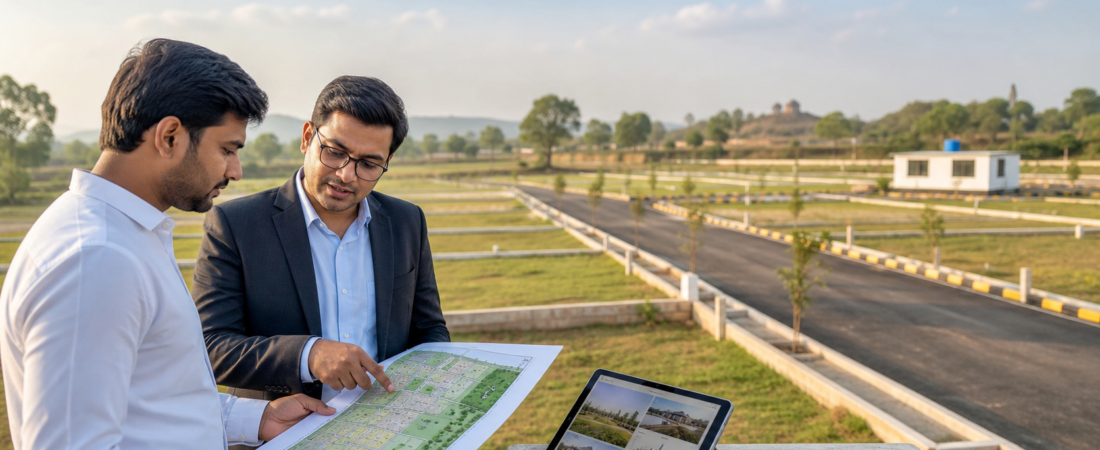
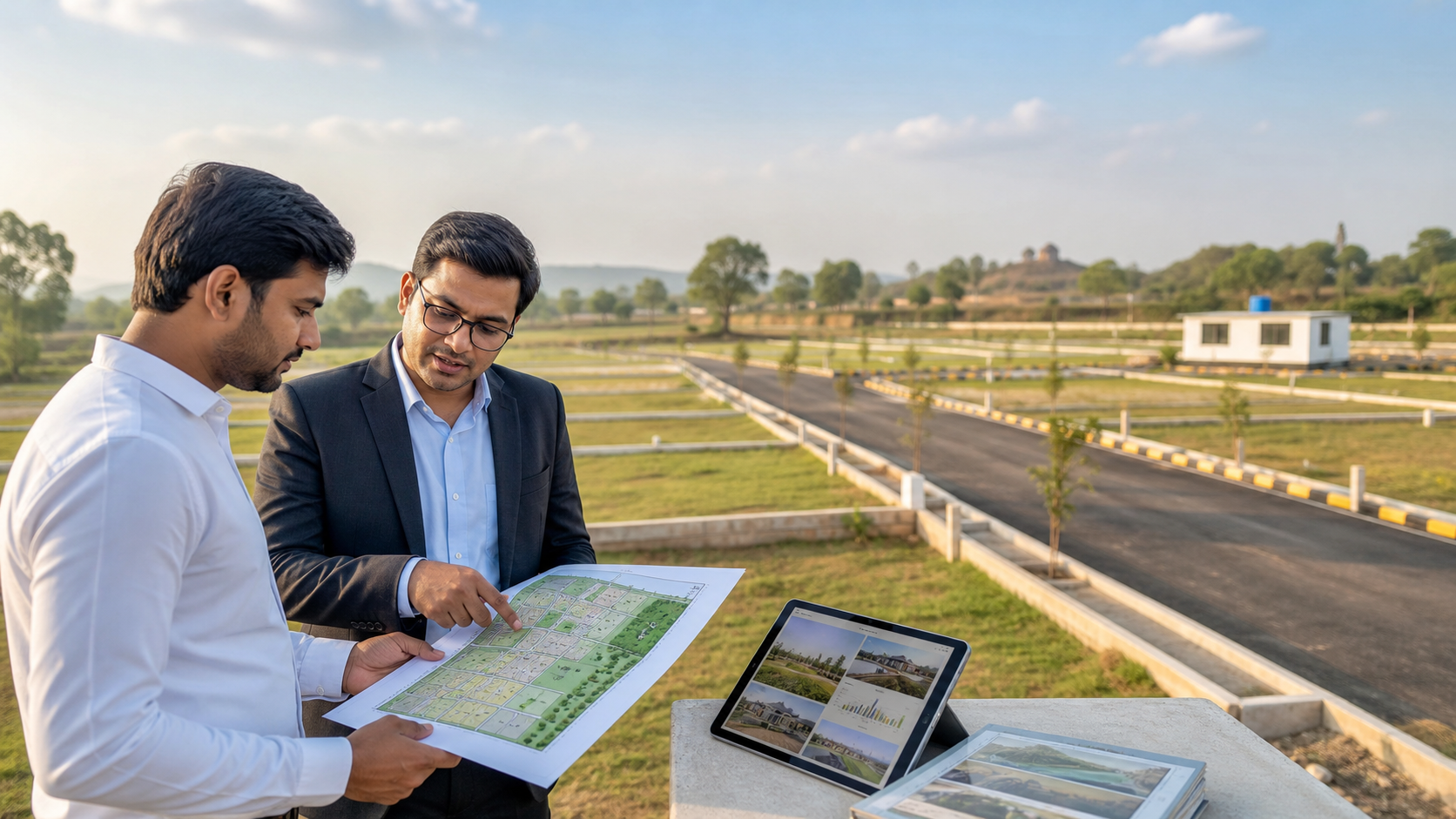
Buying land is emotional, practical, and deeply local. A buyer may like the price on paper, but they still want to know: Is the layout approved? Is the road actually there? Is the location growing? Can I visit the site? Will this become a good investment?
That is why marketing an open plotting layout project is not the same as marketing a normal house or apartment. A realtor cannot simply upload a few photos and wait for calls. They need trust-building content, site-visit planning, local advertising, follow-up systems, and clear proof that the project is genuine.
So, how much do realtors spend on marketing for an open plotting layout project?
The honest answer: it depends on the project size, plot price, competition, location, and how fast the developer wants sales. But for most open plot layout projects, the marketing budget usually falls into one of these ranges:
- Small/local campaign: 1% to 2% of expected sales value
- Standard launch campaign: 2% to 4% of expected sales value
- Aggressive launch campaign: 4% to 7% of expected sales value
If a project has high competition, a remote location, weak brand awareness, or a short sales target, the marketing spend usually has to be higher.
Quick Answer: How Much Should Be Spent?
For an open plotting layout project, a practical marketing budget is usually 2% to 5% of the total projected sales value.
Example:
If the layout has 100 plots and each plot sells for ₹25 lakh, the total project value is ₹25 crore.
A reasonable marketing budget may be:
| Budget Type | Percentage | Approximate Spend |
|---|---|---|
| Conservative | 1% | ₹25 lakh |
| Balanced | 3% | ₹75 lakh |
| Aggressive | 5% | ₹1.25 crore |
This budget is not only for online ads. It should cover photography, videos, brochures, landing pages, SEO, paid ads, site boards, lead management, call handling, and site-visit support.
Realtor Marketing Spend vs Developer Marketing Spend
There is an important difference here.
A developer usually spends from the total project budget because they own the inventory and need brand visibility.
A realtor, broker, or channel partner often spends from their expected commission. If the realtor earns 1% to 3% commission on sales, they may reinvest around 10% to 30% of their expected commission into marketing, depending on how confident they are about conversions.
For example:
If a realtor expects ₹20 lakh commission from a plotted layout project, they may spend ₹2 lakh to ₹6 lakh on ads, content, local campaigns, and lead follow-up.
For serious projects, the best model is usually shared marketing: the developer funds core branding and project assets, while realtors and channel partners spend on their own lead generation.
Where Does the Marketing Money Go?

A strong open plot marketing plan normally includes these cost areas:
| Marketing Activity | Typical Share of Budget | Why It Matters |
|---|---|---|
| Digital ads | 25% to 40% | Generates fast buyer leads from Google, Meta, YouTube, and local campaigns |
| Site photography and video | 8% to 15% | Builds trust by showing real roads, plot markings, entrance, and surroundings |
| SEO and content | 10% to 20% | Brings long-term organic leads from location and investment searches |
| Landing page and website | 5% to 10% | Converts ad clicks into inquiries and site-visit bookings |
| Brochures and print material | 5% to 10% | Helps during site visits, walk-ins, and local distribution |
| Hoardings and local boards | 10% to 20% | Important for nearby buyers and people passing through the location |
| CRM and follow-up | 5% to 10% | Prevents leads from getting wasted after the first call |
| Site visit support | 5% to 15% | Covers transport, refreshments, site staff, and buyer experience |
The mistake many realtors make is spending almost everything on ads and very little on follow-up. In land sales, follow-up is where many deals are won.
Why Open Plot Projects Need More Trust Marketing
With apartments, the buyer can imagine walls, rooms, amenities, and rental value. With open plots, the buyer has to imagine the future.
That means your marketing must answer doubts before the buyer asks:
- Is the layout approved?
- Is the title clear?
- What is the exact plot size?
- Are roads, drainage, electricity, and water available?
- How far is it from the highway, school, hospital, or town center?
- Is the price negotiable?
- Can I get bank loan support?
- What are the registration charges?
- Can I visit the site this weekend?
Good marketing for a plotting layout project is not just “book your plot now.” It is proof, clarity, and confidence.
Best Marketing Channels for Open Plot Layout Projects
1. Google Search Ads
Google Ads work well because many buyers search with high intent. They type phrases like:
- plots for sale near me
- open plots near [location]
- HMDA approved plots in [city]
- DTCP approved layout near [location]
- residential plots near highway
- investment plots near [growth area]
These leads are usually warmer than random social media leads because the buyer is already looking.
2. Meta Ads
Facebook and Instagram ads are useful for awareness and lead generation, especially when the project has strong visuals. Short videos of the site, entrance arch, roads, nearby landmarks, and customer visits can perform well.
But the lead quality must be watched carefully. Cheap leads are not always good leads.
3. YouTube Shorts and Reels
For plotted layouts, video is powerful. A 30-second site walkthrough can do more than a long brochure.
Good video ideas:
- Road approach to the project
- Drone view of the layout
- Plot marking and boundary stones
- Nearby highway or town connectivity
- Weekend site-visit clips
- Buyer questions answered by the realtor
4. Local SEO
SEO is not instant, but it creates compounding value. A realtor or developer should publish pages and posts around location-based searches.
Examples:
- Best Open Plots Near [Location]
- Is It Good to Buy Land Near [Highway/Area]?
- Checklist Before Buying an Open Plot
- HMDA vs DTCP Layout: What Buyers Should Know
- Open Plot Investment Guide for First-Time Buyers
These articles bring serious buyers who are researching before they call.
5. WhatsApp Follow-Up
In open plot sales, WhatsApp is not optional. Buyers want layout PDFs, location pins, plot availability, price sheets, approvals, and site-visit timing.
A good follow-up flow should include:
- Thank-you message after inquiry
- Project brochure
- Google Maps location
- Short site video
- Available plot sizes
- Site-visit invitation
- Reminder before the visit
- Follow-up after the visit
SEO Strategy for This Type of Project
For a plotting layout project, SEO should be local, practical, and buyer-focused.
Target keywords:
- open plots in [location]
- residential plots in [location]
- approved plots near [location]
- plots near [highway or landmark]
- gated community plots in [city]
- land investment in [location]
- plot layout project in [location]
The website should have:
- A dedicated project page
- Location map
- Plot sizes and price range
- Approval details
- Real site photos
- FAQs
- Downloadable brochure
- Site-visit call-to-action
- WhatsApp button
- Internal links to related blog posts
Do not write only for Google. Write for the buyer who is worried about making a wrong decision.
AEO: Direct Answers Buyers May Ask
How much should a realtor spend on marketing an open plot project?
A realtor may spend 10% to 30% of expected commission, while a developer-led campaign may spend 2% to 5% of total project sales value.
Which marketing channel gives the best leads for open plots?
Google Search Ads usually bring high-intent leads, while Meta Ads and YouTube videos help create awareness and site-visit interest.
Is SEO useful for open plot sales?
Yes. SEO helps attract buyers searching for location-based plot investment information. It is slower than paid ads but better for long-term lead generation.
What is the biggest mistake in open plot marketing?
The biggest mistake is spending money on leads without a proper follow-up system. Many buyers need multiple calls, proof documents, location details, and a site visit before deciding.
Are photos enough to sell plotted layouts?
No. Photos help, but buyers also need layout approvals, location proof, road access, plot dimensions, pricing, and a clear site-visit process.
Suggested Monthly Budget Plan
For a medium-sized open plotting layout project, a practical monthly plan may look like this:
| Channel | Suggested Monthly Spend |
|---|---|
| Google Ads | ₹50,000 to ₹2,00,000 |
| Meta Ads | ₹40,000 to ₹1,50,000 |
| YouTube/Reels production | ₹25,000 to ₹75,000 |
| SEO content | ₹20,000 to ₹60,000 |
| Landing page and tracking | ₹15,000 to ₹50,000 |
| Print and local branding | ₹30,000 to ₹1,50,000 |
| CRM and calling support | ₹20,000 to ₹75,000 |
Small realtors can start lower. Large projects with urgent sales targets may spend much more.
The better question is not “How little can we spend?” The better question is “How much does one qualified site visit cost, and how many site visits do we need to sell one plot?”
Simple Formula to Plan the Budget
Use this formula:
Marketing budget = Target sales value x marketing percentage
Then track:
Cost per lead Cost per qualified lead Cost per site visit Cost per booking Return on marketing spend
Example:
If you spend ₹3,00,000 in a month and get 300 leads, your cost per lead is ₹1,000.
If 30 people visit the site, your cost per site visit is ₹10,000.
If 3 buyers book plots, your cost per booking is ₹1,00,000.
Now compare that with your profit or commission per booking. That is how you know whether the campaign is working.
Final Thoughts
Marketing an open plotting layout project is not only about getting leads. It is about building enough confidence for a buyer to visit the site, ask serious questions, compare the location, and finally book the plot.
A realtor should spend carefully, but not too timidly. If the project is good, the documents are clear, and the location has real growth potential, marketing becomes an investment rather than an expense.
For most plotted layout projects, a 2% to 5% marketing budget is a sensible starting point. Spend it on clear content, strong local SEO, targeted ads, real site visuals, and disciplined follow-up. That combination brings better buyers, not just more phone numbers.